Rhone Route: 1st Stage Andermatt - Oberwald


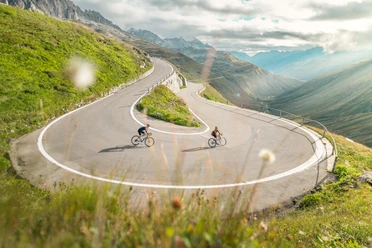
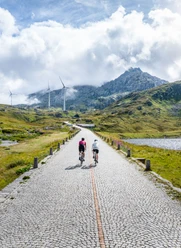
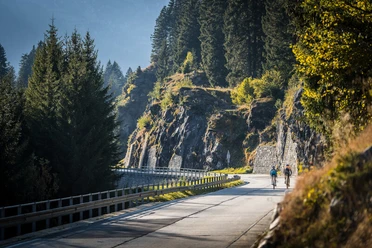
Pure pass and alpine feeling in Andermatt, ideal for cyclists. A long straight initially leads to the neighboring Hospental with its well-preserved village core. After Realp, the road climbs sharply – and so does the pulse. About a thousand meters of elevation with a maximum gradient of eleven percent have to be mastered. With a bit of luck, you may occasionally hear a marmot or the grand old steam railway whistle by. After the Furka Pass summit (2436 m above sea level), one can look forward to a thrilling descent. Soon the Rhone Glacier is reached near Hotel Belvédère. By then you are no longer alone. Numerous tourists want to see the glacier, which has lost a considerable part of its original size due to climate change. Today, the glacier tongue still lies approximately at the height of the hotel. After Gletsch, the landscape begins to change, and upon arrival in Oberwald, you are already in significantly flatter terrain.
- 2:30 h
- 38.31 km
- 993 m
- 1,062 m
- 1,366 m
- 2,429 m
- 1,063 m
- Start: Andermatt Station
- Destination: Oberwald Station
Good to know
Pavements
- Street (19%)Asphalt (81%)
Best to visit
- suitableDepends on weather
Directions
Tour information
Culturally interesting
Mountain summit
Nature highlight
Refreshment stop
Equipment
- Clothing appropriate to the weather
- Drink and provisions
Bicycle light
Directions & Parking facilities
- Getting there
Andermatt is very well accessible from all four cardinal directions in summer and is therefore a pleasant starting point.
ParkingIn Andermatt, there is a large car park directly behind the station.
Public transportationAndermatt is the connecting point of the Matterhorn Gotthard Railway and is therefore very well accessible by train. The timetable is as follows: SBB Timetable
Additional information
Author
Andermatt-Urserntal Tourismus GmbH
Organization
Région de vacances Andermatt
Author´s Tip / Recommendation of the author
- Rhone Glacier with Ice Grotto
- Steam Railway Furka Mountain Line
- Historic Settlement Gletsch
Safety guidelines
- The Furka Pass is closed in winter.
Pay attention to the weather forecasts. In the Alps, rapid weather changes can occur.
Cyclists should keep an eye on the weather report in advance, as parts of the route are located over 2000 m above sea level and, in extreme cases, slight snowfall may occur.