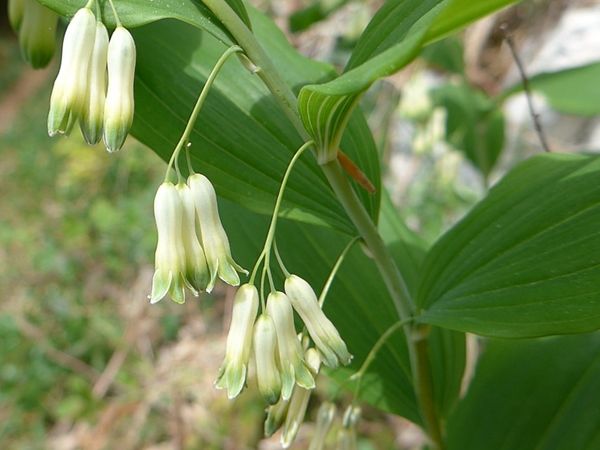
It is difficult to determine the age of perennial herbaceous plants. Not so with the Solomon's seal (Polygonatum multiflorum): every year, the dead flower shoot leaves a seal-like scar on the rhizome (underground, thickened shoot section). The plant owes its name to this scar. The species belongs to the asparagus family and blooms in spring in sparse deciduous and mixed deciduous forests before the tree leaves sprout. The species owes its ability to get off to such a quick start after winter to its rhizome, which stores nutrients. In the Middle Ages, Solomon's seal was said to have miraculous healing and magical powers. How old was the plant whose rhizome is on display in the exhibition?
Masterpieces
Many-flowered Solomon's seal