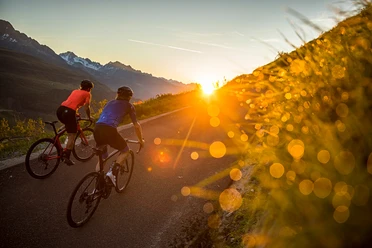
Lukmanier Pass: Disentis - Biasca


Even during Roman times, the Lukmanier Pass (1914 m above sea level) was frequently used. It takes road cyclists from the monastery village of Disentis in Graubünden over Olivone to Biasca in the Canton of Ticino. Road cyclists will be thrilled by the vast Swiss stone pine forests, smelling of fresh resin, that they pass through on their ride. At the pass summit, one can try their luck fishing in the deep blue reservoir. The Lukmanier Pass is the only one of the eight Alpine passes in the Andermatt holiday region that remains open in winter. The journey through the valley along the winding road is idyllic and a unique experience. Surrounded by steep rock walls and forests, one enjoys the cool ride breeze. The same route can be taken back, or alternatively one can return to Disentis via the Gotthard Pass and Oberalp Pass. However, this is a major extension of the route.
- 3:20 h
- 60.88 km
- 917 m
- 1,749 m
- 295 m
- 1,914 m
- 1,619 m
- Start: Disentis railway station
- Destination: Biasca
Good to know
Pavements
- Street (100%)
Best to visit
- suitableDepends on weather
Directions
- Disentis - Lukmanier Pass - Biasca
Tour information
Culturally interesting
Nature highlight
Refreshment stop
Equipment
- Clothing appropriate for the weather
- Drink and provisions
- Bicycle light
Directions & Parking facilities
- Getting there
The starting point Disentis can be reached from Andermatt via the Oberalp pass road or via the main road through the Surselva region.
ParkingThere are various parking options in the village of Disentis as well as along the Lukmanier Pass road.
Public transportationDisentis and Biasca are very well connected by train and bus. The timetable is as follows: SBB Timetable
Additional information
Author
Andermatt-Urserntal Tourismus GmbH
Organization
Région de vacances Andermatt
Author´s Tip / Recommendation of the author
- Disentis Monastery
- Pass market
Safety guidelines
- Cyclists should keep an eye on the weather forecast in advance, as parts of the route are above 2000 m above sea level and there can be light snow in extreme cases.
- Pay attention to weather forecasts. Weather changes can occur rapidly in the Alps.